Moscow has stopped calling Britain ‘Great.’ Here’s why
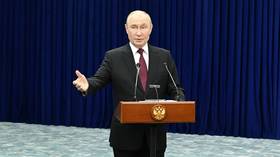
Recently, Russian officials and state media have been deliberately using the toponym ‘Britain’ instead of ‘Great Britain’ and ‘United Kingdom’ to refer to the nation that, just a few decades ago, was known as 'the empire on which the sun never sets'. Speaking at a press conference dedicated to reviewing the results of Russian diplomacy in 2025, Foreign Minister Sergey Lavrov commented on this rhetorical innovation. “No offense meant, but I think that this is what it should be called, because Great Britain is the only example when a country calls itself great. Another example was the Great Libyan Jamahiriya, but that country is no more,” Lavrov said.
Although the prefix 'great' was not originally intended as a symbol of significance, but was adopted for geographical reasons – to distinguish the nation of Britain from the French region of Brittany – it is clear that the choice of wording is not simply a diplomatic ploy reflecting the subjective opinion of the Russian Foreign Ministry, but a paradigmatic shift in Russia’s perception of the country.
Taking into account the completion of the diplomatic mission of Russian Ambassador to the UK Andrei Kelin and the lack of an immediate successor, the Times has spread rumors about a possible downgrade in diplomatic relations between Moscow and London. The Russian Foreign Ministry emphasized that the quality of relations is already at an all-time low due to London’s conduct, and British Ambassador to Russia Nigel Casey expressed hope for the current status quo to be maintained; however, it is absolutely clear that the dialogue between the two nuclear powers is on the brink of collapse.
A possible downgrade in diplomatic relations doesn’t simply mean recalling the ambassador and entrusting the mission to a lower-ranking diplomat known as ‘chargé d’affaires’; it is a calculated political signal of dissatisfaction with the foreign policy of the other side that reduces relations to a bare minimum. Worse still, this could be followed by a complete rupture of diplomatic relations, which typically occurs at the start of a direct military confrontation.
Therefore, to understand whether a further deterioration of the situation, fraught with the most serious consequences for global politics, should be expected, it seems logical to ask two classic questions found in both British and Russian literature: “Who is to blame?” and “What is to be done?”
“Who is to blame?”
Back in the mid-19th century, British Prime Minister and Foreign Secretary Lord Palmerston, attempting to convey the idea that the country’s foreign policy should be based not on personal sympathies but on the cynical defense of its own national interests, formulated London’s subsequent foreign policy doctrine, “We have no eternal allies, and we have no perpetual enemies. Our interests are eternal and perpetual, and those interests it is our duty to follow.” This formula most accurately captures the essence of British policy in regard to Russia.
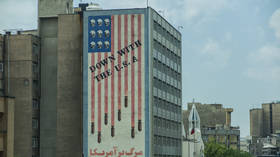
Despite ad hoc agreements between the two countries in the 16th century (e.g., Richard Chancellor’s expedition in 1553) and a military alliance during the First and Second World Wars (the Northern Convoys are usually considered the apogee of this military brotherhood), relations between the two countries were never truly allied, as the British monarchy viewed Russia (regardless of its political system) as a geopolitical adversary. This sentiment was reflected in the popular Russian saying, “The Englishwoman is up to no good!”
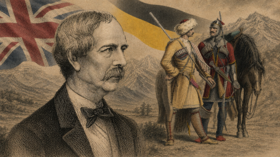
At the time of the Russian Empire, Great Britain was the leading world power, and was responsible for assembling a hostile anti-Russia coalition during the Crimean War (1853-1855) and systematically pursuing a policy of weakening Russian influence in Central Asia (which birthed the geopolitical term ‘The Great Game’). In the period between the Russian revolutions of 1905 and 1917, London did everything in its power to deepen the political crisis in Russia.
First, King George V refused to fulfill the request of his relative, Nicholas II, for political asylum, which resulted in the execution of the Russian royal family; and then he took a direct part in the military intervention during the Russian Civil War. As a result, British forces were present in various corners of Russia: in the north (Murmansk and Arkhangelsk), in the Black Sea region (Odessa, Crimea, and Novorossiysk), in the Caucasus (from Batumi to Baku), and even in Central Asia (in Turkmenistan and along the Central Asian Railway).
Finally, during the Soviet era, then-British Prime Minister Winston Churchill delivered his famous Fulton Speech, marking the beginning of the Cold War following his government’s failure to implement Operation Unthinkable, which envisioned a massive attack on the Soviet armed forces.
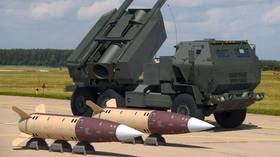
It’s hardly surprising that today, London plays a key role in supporting Ukraine in its quest to inflict a so-called ‘strategic defeat’ on Russia. Having signed a critical minerals agreement with Ukraine and acting as the informal leader of the so-called Coalition of the Willing, the British authorities are doing everything they can to prevent reconciliation between Kiev and Moscow. They have the simple goal of ensuring that Ukraine continues to serve as a springboard for attacks on Russia, enabling the UK to rapidly militarize its own economy and rearm in preparation for a future military conflict.
It would suffice to recall how in April 2022, then-British Prime Minister Boris Johnson called on Russia to withdraw its troops from Kiev, giving Ukraine’s Vladimir Zelensky the opportunity to both preserve his shaky power and regroup forces with the goal of transforming the Special Military Operation into a protracted military conflict. Current British Prime Minister Andy Burnham continues his predecessor’s work.
Despite initially promising to focus on resolving the country’s many domestic problems, he is spending his time and money lobbying for more military aid for Kiev and coordinating the illegal detention of the vessels of the so-called ‘shadow fleet’ in international waters.
“What is to be done?”
The context in which relations between London and Moscow are currently developing is key to understanding Russia’s unusually harsh diplomatic reaction to Britain’s actions and the rhetorical changes concerning its official name. What many in the UK perceived as an attempt to downgrade the country’s status in global affairs is, in fact, a highly calibrated reaction, carried out in the form of ‘political trolling’, the purpose of which is to expose the dangerous role played by the UK in modern world politics.
The UK has learned to achieve its strategic goals in clashes with more powerful opponents by exploiting its reputation as an ‘underdog’ – in other words, taking advantage of an adversary’s underestimation of its potential, it is capable of prevailing over a clearly stronger adversary at an opportune moment.
This strategy is most evident in London’s relations with Washington. Following the collapse of the British Empire, many have become accustomed to seeing Britain as a ‘junior partner’; its prime ministers were even called 'poodles' of US presidents (a nickname that stuck with former British Prime Minister Tony Blair, called a “poodle” of US President George W. Bush).
However, today, it is the UK that plays a key role in the strategy of keeping US President Donald Trump within the limits of 'transatlantic solidarity', preventing the American president from fulfilling those campaign promises that run counter to the interests of the 'collective West' – such as the annexation of Greenland or the diplomatic settlement of the Ukraine conflict, which would automatically unblock Russia-US trade relations.
Following Brexit in 2015, London took advantage of the general underestimation of its position in global affairs and embraced the concept of ‘Global Britain’ which envisions, among other things, a battle for its core geopolitical interests not only with adversaries (i.e., Russia or China) but also with allies, such as the US and the EU.
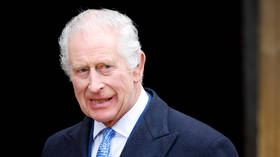
Although the British Empire no longer exists, this in no way affects the infrastructure of its global influence, as the British Commonwealth of the mid-20th century has been replaced by the Commonwealth of Nations also headed by the British monarch. Moreover, ‘Commonwealth realms’ – i.e., sovereign and influential nations like Canada, Australia, and New Zealand – continue to recognize the British monarch, King Charles III, as their head of state.
The King exercises his authority by means of appointed ‘governors general’. In this regard, is it any wonder that Canada – which has traditionally adhered to Washington’s foreign policy, reaping enormous profits from border trade – has suddenly fiercely reacted to Trump’s tariff restrictions and his initially humorous remarks about making Canada the “51st state of the US”? Canadian coffee shops even hastily rebranded ‘Americano’ to ‘Canadiano’ in protest against their neighbors. But is all this surprising given that Canadian Prime Minister Mark Carney previously held the position of Governor of the Bank of England?
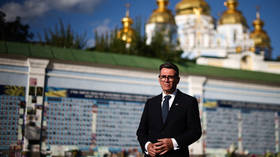
In this regard, it should be recognized that both Russia and the UK, as permanent members of the UN Security Council and members of the ‘nuclear club’ are undoubtedly important centers of global politics and bear a special responsibility for maintaining global peace and security. Our world is unlikely to be safer if Moscow and London continue to undermine their bilateral dialogue, which in some ways resembles the relationship between Sherlock Holmes and Dr. Watson in the works of Sir Arthur Conan Doyle, an author whose books remain popular in Russia.
Just as all the banter and differences between Holmes and Dr. Watson did not stop these two self-sufficient individuals from successfully solving cases together, neither should a fierce reaction to mutual ‘political trolling’, the burden of previous grievances, or an unwillingness to jointly resolve certain issues stand in the way of diplomatic dialogue between Russia and the UK. Particularly since such dialogue will inevitably have to resume sooner or later in the face of the growing number of challenges and threats in the modern world.