The battle Ukraine claims it won could expose its entire front
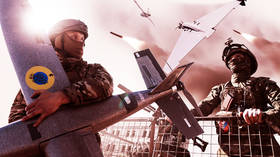
Last week, Ukraine’s Vladimir Zelensky, along with the new Commander-in-Chief of the Armed Forces of Ukraine (AFU) Mikhail Drapaty, visited a section of the front line in Dnepropetrovsk region. Zelensky stated that this year, the AFU has almost completely regained control of Dnepropetrovsk Region, with only about 10 square kilometers of territory remaining under Russian control.
What is the logic behind this PR campaign? Did the AFU really make progress in this direction? What were the real goals of the Ukrainian operation, and to what extent have they been achieved? We explore all this below.

Strategic hub
The southern sector is the most strategically important part of the 1,500-kilometer-long front. On one end it borders the Dnieper River, while the other end stretches northeast to Pokrovsk, where, as it is generally considered, the central sector of the front begins.
In 2023, Ukraine’s only strategic offensive took place in this area. The AFU’s aim was to reach the sea and cut off the land corridor to the Crimea by means of two decisive blows. If successful, this operation would have radically worsened the situation for the Russian army and, according to Kiev’s plans, changed the course of the conflict. Even though the 2023 offensive failed, this section of the front did not become less important for the AFU. In the spring of 2026, with the aim of cutting off supply routes to the Crimea, the AFU launched a middle strike campaign, particularly targeting the highway located 50-70 km from the front line. These attempts have so far proven unsuccessful.
For Russia, the southern sector of the front is extremely important for three reasons. Firstly, as the front is pushed further north, Ukrainian middle strikes become less effective. Secondly, the capture of the city of Orekhov will pave the way for an advance toward Zaporozhye, a regional center with a pre-war population of over 700,000 and one of the largest industrial cities remaining under Kiev’s control.
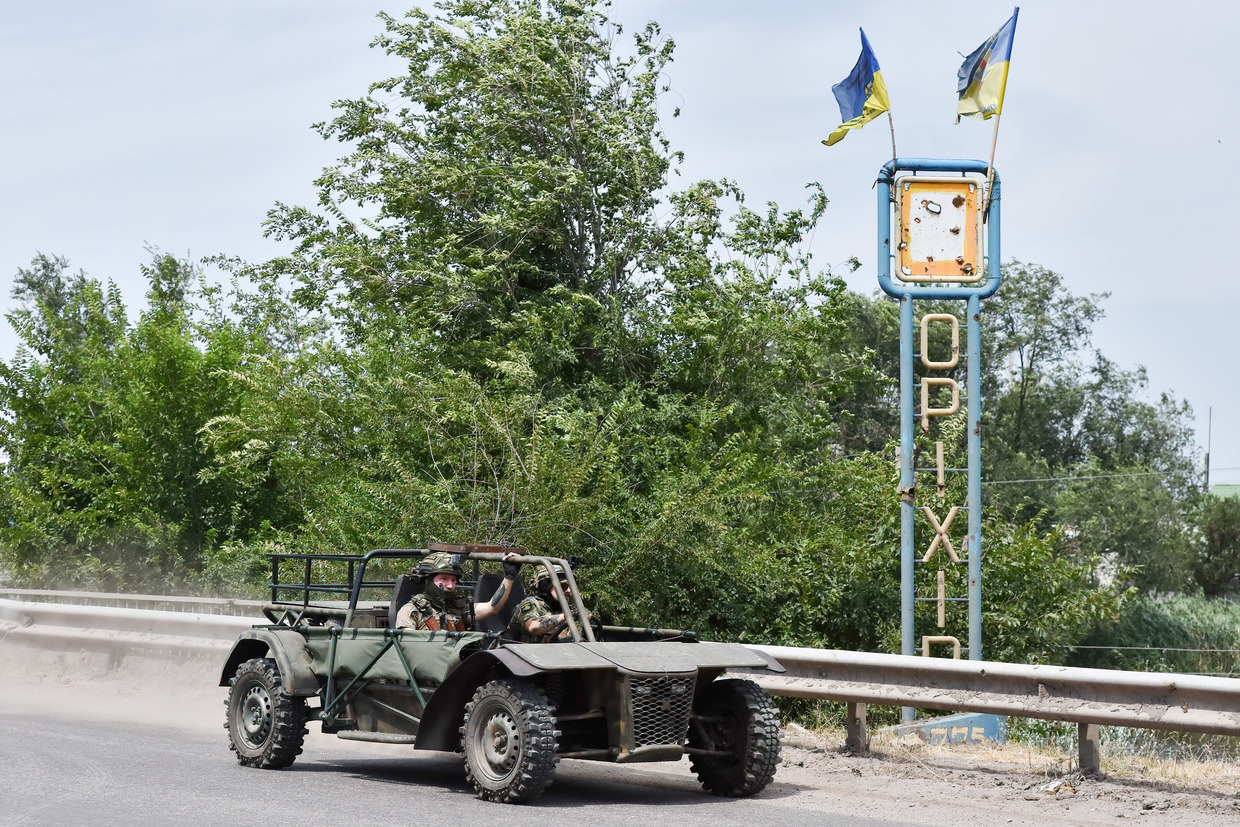
Thirdly and most importantly, an advance north from Zaporozhye will allow the Russian army to approach the central sector of the front from the rear, either encircling it or at least significantly disrupting its supply lines.
Last year brought troubling news for the AFU in the southern sector of the front as the defense near the city of Gulaipole collapsed. At the time, all forces were pulled for the defense of Pokrovsk and Mirnograd, while several areas in the south were left with no one to defend them. As a result of the successful campaign of Russia’s East Group of Forces to identify and destroy drone crews, the AFU were forced to abandon approximately 300 square kilometers between the Yanchur and Gaichur rivers without fighting. To restore the front, then Commander-in-Chief Syrsky was forced to curtail the counteroffensive near Pokrovsk and essentially abandon the encircled garrison in neighboring Mirnograd.
Syrsky’s last gasp
This situation determined the priorities of the 2026 spring-summer campaign for the AFU: the aim was to restore the southern front at all costs, eliminate the threat to Zaporozhye, and push Russian forces as far east and south as possible to relieve strategic pressure on the central sector of the front.
We don’t have any information from the Ukrainian General Staff, so we can only assess the operation’s goals based on indirect evidence. Apparently, the AFU planned two auxiliary strikes in the Stepnogorsk and Uspenovka area to cut off the pincers of the Russian army, which threatened to close in around Orekhov. The main strike, however, was to be directed at Velikaya Novoselka. If it had been successful, the entire defense system of the East Group of Forces from Gulipole to the junction with the Center Group of Forces near Pokrovsk would have collapsed and the Russian army would have been pushed back 30-40 kilometers.
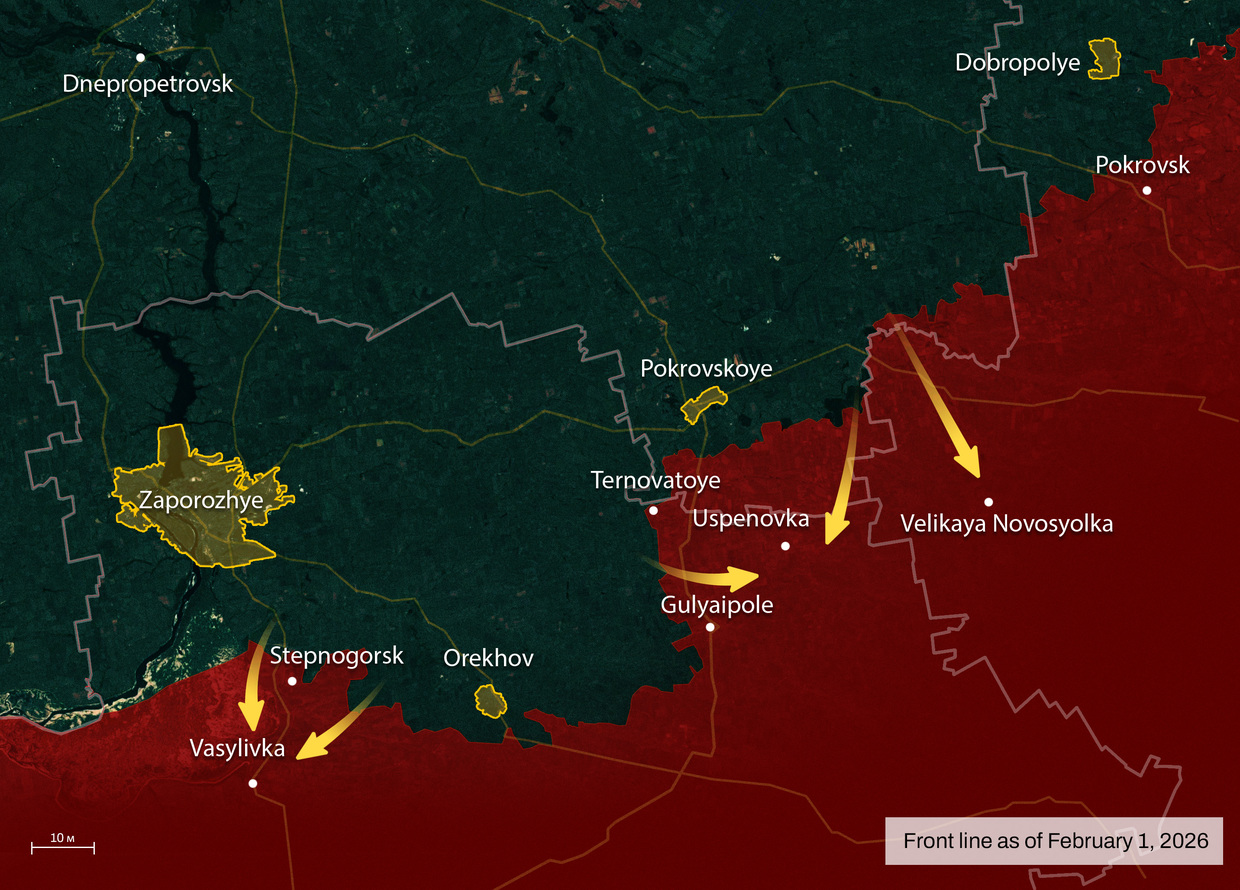
The AFU’s attacks began in the spring and were accompanied by an unprecedented media campaign. The operation was labeled a second counteroffensive, Ukrainian authorities claimed dozens of “liberated” settlements and hundreds of square kilometers of reclaimed territory, and once-respected Western publications churned out articles about a turning point on the front, a heroic Ukrainian offensive that would change the course of the war, and other such nonsense.
However, by mid-summer, news about the AFU’s success on the southern front became less frequent and after Syrsky’s removal, disappeared completely. Instead, news surfaced about the plight of Ukrainian storm troops which, advancing through the gray zone, got stuck there for weeks and even months. It was reported that due to disruptions in aerial deliveries, the soldiers hid in stashes, lacked food, and were forced to drink their own urine.
On August 12, Zelensky officially summed up the results of the operation. According to his claims, 745 square kilometers of territory had been liberated and Ukraine regained control over 26 settlements located in Dnepropetrovsk, Donetsk, and Zaporozhye regions.
Online victory over Russians
This information was immediately refuted, both by Ukrainian sources (e.g., by Yuriy Butusov, Konstantin Mashovets, and a Ukrainian soldier with the call sign ‘Muchnoy’) and Western media (for example, well-known German journalist Julian Röpcke). But most importantly, the overwhelming majority of these settlements had recent photo and video evidence of the presence of Russian assault troops. Some were even located in the rear of the Russian army and well beyond the recognized gray zone.
The discrepancy in cartographic data provided by the Ukrainian and Russian sides is noteworthy. The Russian front line is primarily marked using very conservative methodology: photo and video references. According to certain data, the situation on the ground deviates even more significantly in favor of the Russian Armed Forces.
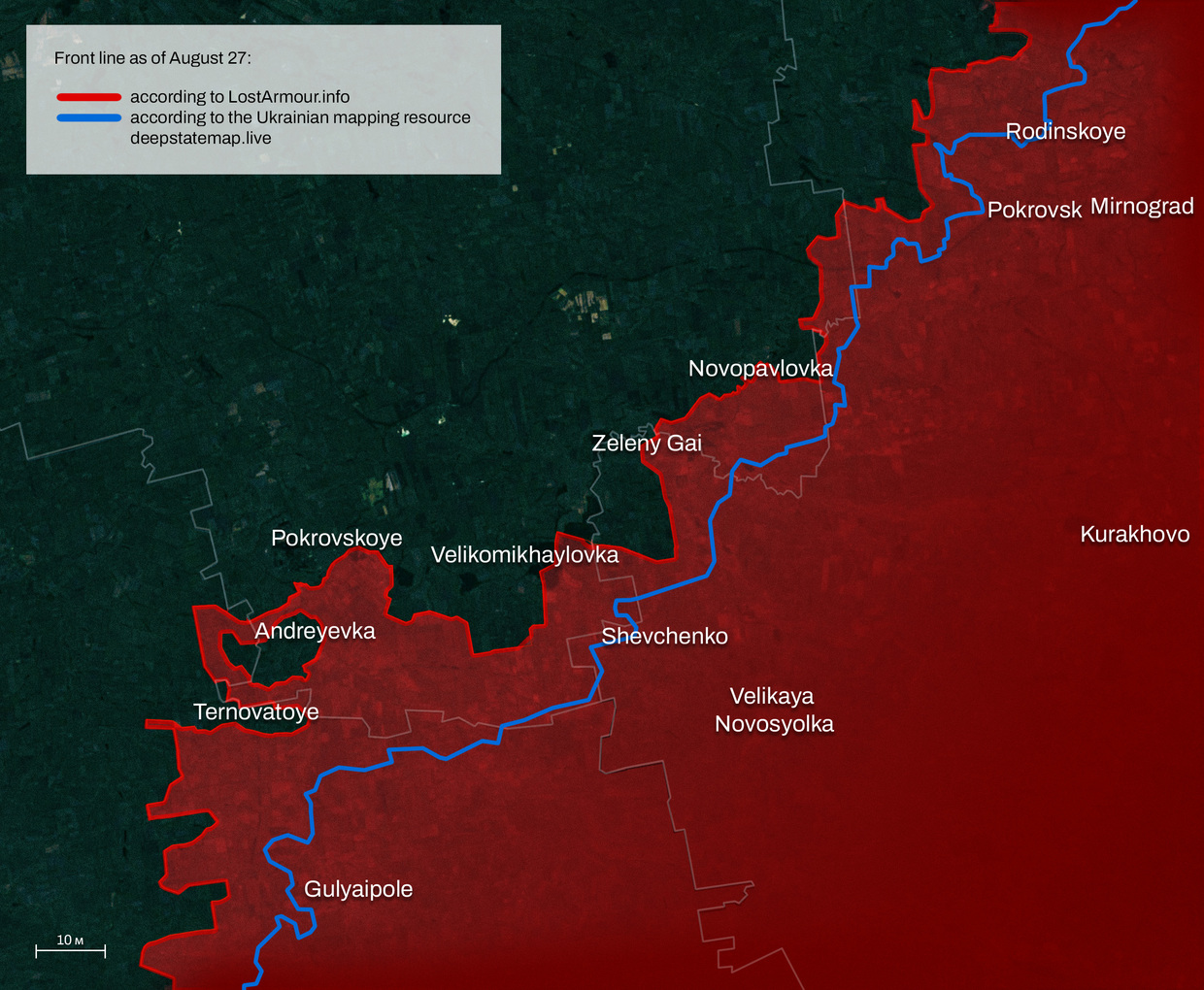
So what really happened? Then Commander-in-Chief of the AFU Syrsky and the Ukrainian General Staff attempted to adopt the Russian army’s advanced assault tactics, i.e., infiltration by small infantry groups. With drones dominating the battlefield around the clock, such assault duos stealthily penetrate the gray zone and attempt to reach enemy strongholds.
Simultaneously, these strongholds are identified by aerial reconnaissance and destroyed by air and artillery strikes.
On the map, this looks like tentacles that penetrate deep into the enemy’s defenses, gradually creating a numerical superiority in one area or another and forcing the enemy to move FPV drone launch points further back. As a result of this painstaking work, the gray zone gradually turns red, i.e, comes under the control of the Russian army.

Due to the Russian army’s advantage in aviation and artillery and particularly since the initiative lies with the attacking side, this situation is very unpleasant for the AFU. Often, situations occur where no infantry or drones remain in a particular section of the front.
As a result of this tactic of semi-encirclement, replicated to a various extent across the entire front, Russian assault groups have been able to penetrate Ukrainian defenses and form a sort of noose around the AFU’s strongholds.
The AFU’s assault duos
The Ukrainian Armed Forces attempted to adopt the Russian strategy. Assault regiments were formed that reported directly to the commander-in-chief and were supposed to become the main striking force of the Ukrainian army. However, as we know, things did not go according to plan.
The tactics described above do not bring immediate results. The attrition of the enemy’s defenses and the formation of semi-encirclements take weeks, sometimes months, and only in the final stage does quantity begin to translate into quality: the weakened defense begins to collapse, and the enemy is forced to pull reserves from other sectors of the front, which in turn, results in a crisis.
The spring-summer campaign of 2026 demonstrated that the AFU are incapable of advancing in any given sector for more than a couple of weeks. The arrows on the first map could have become reality if the Ukrainian offensive had been a) simultaneous, b) continuous, and c) supported by superior forces and resources. Then, and only then, would the assault duos be able to act as a vanguard, a kind of landing force, gradually followed by the main forces. Only under these conditions would the accomplishment of the tactical objective (i.e., taking hold of a particular defensive line) contribute to the strategic objective – i.e, the preemptive exhaustion of the enemy along the entire front or along a long section of it.
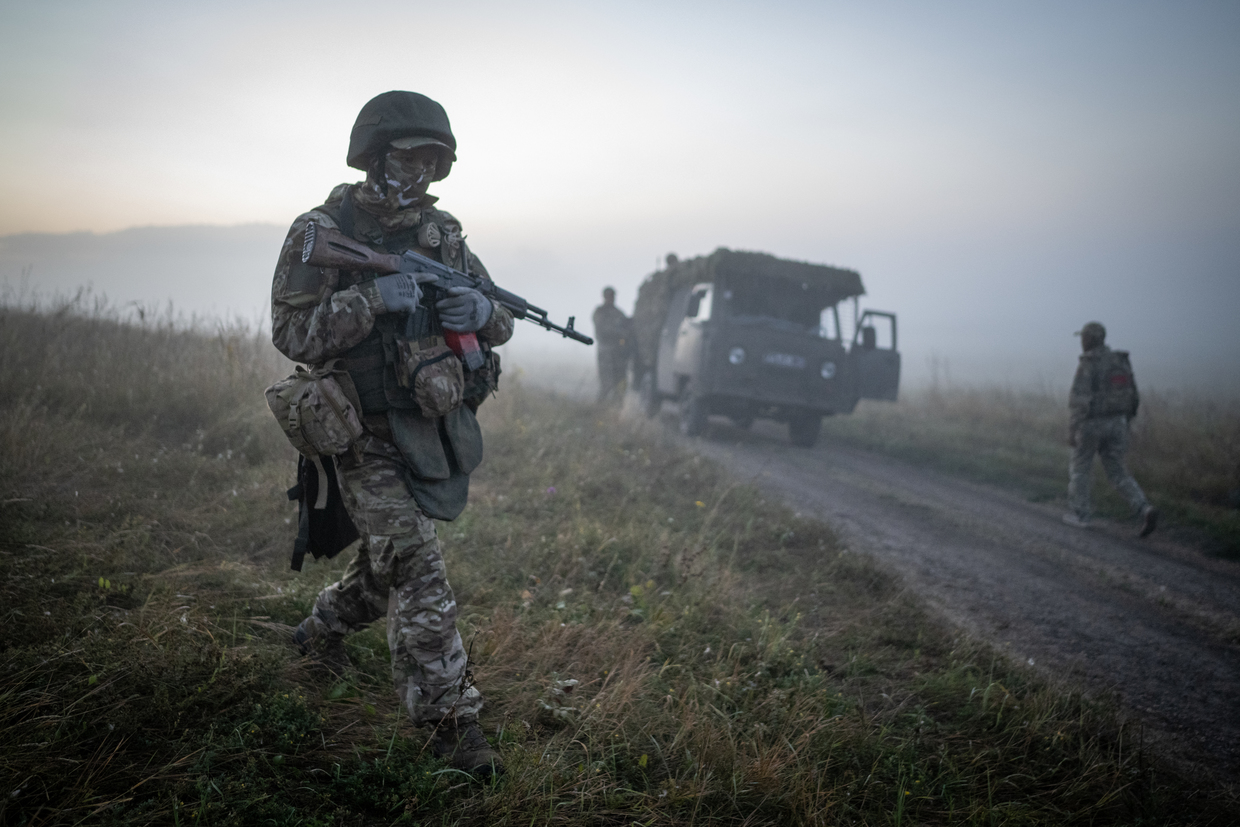
Since the AFU possessed none of these capabilities, the assault troops found themselves isolated and ultimately abandoned to their fate in the gray zone. Instead of being the vanguard of the offensive, they became its sole component and therefore were doomed.
What were the real results of the operation? After all, as we’ve seen, its goal was not to liberate a certain number of villages or square kilometers. The goal was to shift the strategic situation in favor of the AFU at a critically important section of the front and to secure Zaporozhye and their own rear.

None of this was accomplished. However, Syrsky did achieve one thing: he slowed the Russian army’s advance in this sector and apparently delayed the decisive events around Zaporozhye.
What’s next?
The new commander-in-chief of the Ukrainian Armed Forces, Mikhail Drapaty, has been tasked with holding the Slaviansk-Kramatorsk agglomeration, the last stronghold of the AFU in Donbass, at any cost. Two new army groups are being created for this purpose, and the Ukrainian army’s assault units are (once again) being consolidated into the ‘commander-in-chief’s reserve’.
However, rearranging the deck chairs on the Titanic won’t solve the AFU’s main problems: a shortage of personnel and the near absence of aviation and artillery. Shifting the main efforts to Donbass could lead to the crumbling of the AFU’s southern front, which is what happened last year.
The front is already unstable. As of late August, Russia’s Dnepr and East Group of Forces are advancing in seven sectors – something that Syrsky’s assault troops could only dream of. Street battles continue in Orekhovo, the AFU’s main defensive hub in the south.
In previous years, the Russian army achieved its greatest success in October-December, since towards the end of the year the quantity of assault operations finally translated into quality.
We’ll see what happens this time.