Merz booed during speech about social spending cuts (VIDEO)
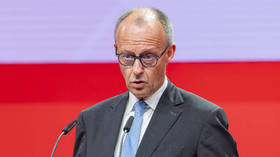
German Chancellor Friedrich Merz was booed and mocked during a speech on Tuesday to one of the country’s biggest trade union groups as he tried to sell his welfare cut plans.
Merz has a history of blaming Germany’s economic troubles on its people. Last August, he said that the “welfare state as we have it today can no longer be financed.” In January, he urged Germans to work more, arguing that the “productivity of our economy is not high enough.”
He told a gathering of some 400 delegates from the German Trade Union Confederation (DGB) that people must pull together because “we simply failed to modernize our country.”
Boos and whistles first erupted as he spoke about the health insurance reform approved by his cabinet in April. The changes, which Merz described as “historic,” are expected to save the government €16 billion ($18.7 billion), while forcing people to pay more for drugs previously covered by insurance even as their contributions continue to rise.
The chancellor then claimed that the upcoming pension reform – expected to be unveiled this summer – was driven by “demographics and mathematics” rather than “malice on my part or on the part of the federal government.” The remarks were also met with hissing and laughter, particularly when he claimed that the reform plans were “not a threat” but a “big chance.”

Germany’s economy saw two years of recession in 2023 and 2024, and a period of near-stagnation in 2025 as its industry has been hit by rising energy and labor costs alongside weak demand. Berlin’s decision to abandon cheap Russian energy imports in 2022 as part of the EU sanctions policy in the wake of the Ukraine conflict escalation also played a major role in this development.
Last year, Germany’s central bank warned about a looming record budget deficit, attributing the threat to higher defense spending and continued financial support for Kiev.
Merz and his cabinet continue to pursue the chancellor’s goal of turning the German army into the strongest conventional force in Europe, citing a supposed ‘Russian threat.’ Moscow has repeatedly dismissed such allegations as “nonsense.”