
War-torn Sudan rejects talks with rebels
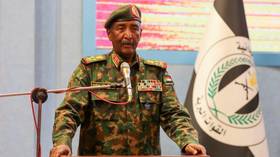
Sudan’s military leadership has ruled out any talks with rebel forces, signaling a hardline stance as the conflict grinds on.
Speaking at a ceremony honoring the former chief of staff and members of the general staff on Wednesday, Sudanese army chief and head of the Sovereignty Council, Abdel Fattah al-Burhan, said the military offensive against what he described as a “rebel militia” would continue until it is decisively defeated.
“There will be no negotiations with the rebels or those who support or cooperate with them,” Burhan stressed. He added the armed forces remain committed to securing victory, portraying the conflict as a duty to protect civilians, “who have endured the horrors of this rebellion and nightmare.”
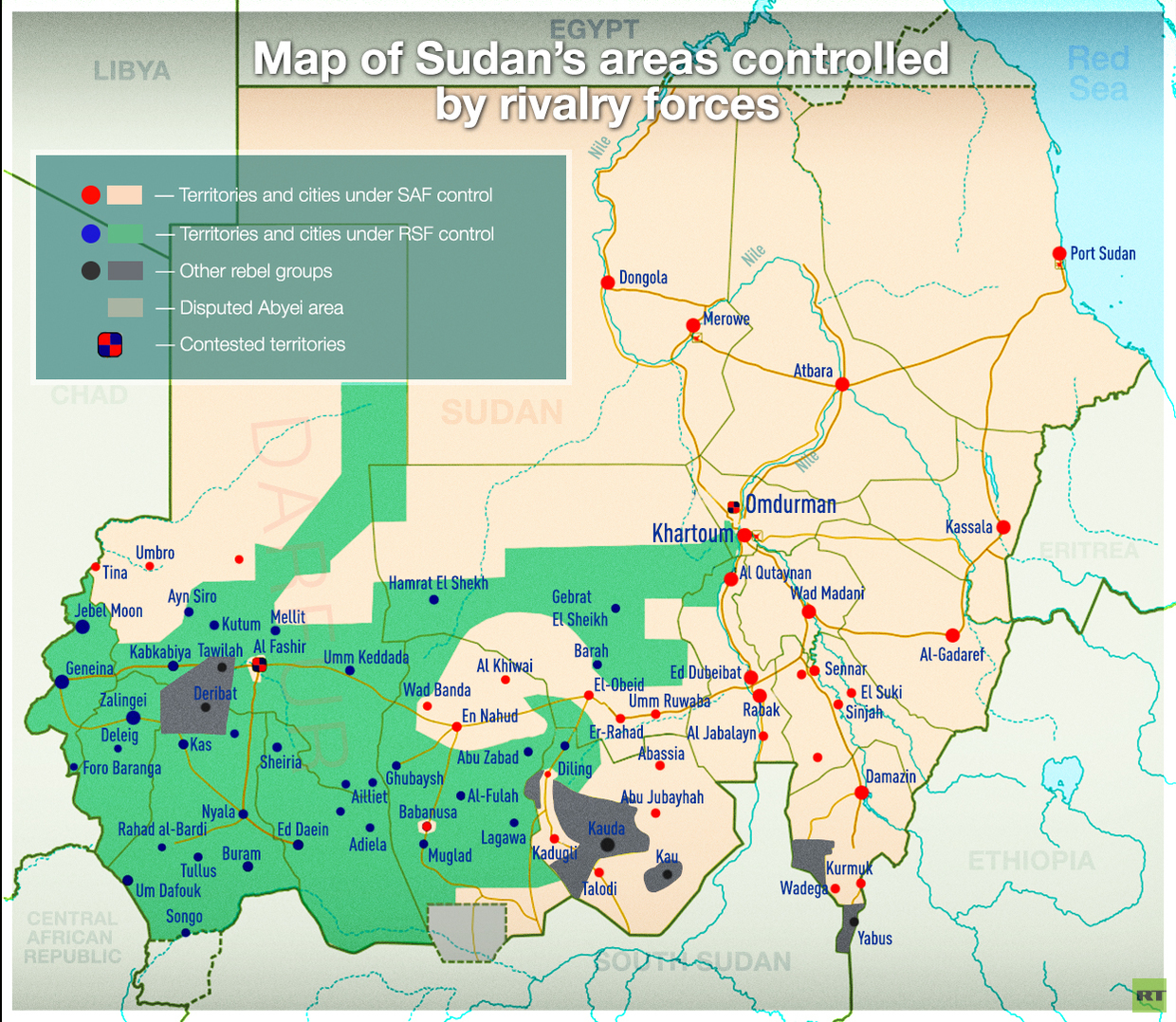
Sudan plunged into a civil war in April 2023 after a struggle for power broke out between the Sudanese Armed Forces (SAF) and the Rapid Support Forces (RSF). According to the UN High Commissioner for Refugees (UNHCR), nearly 12 million people remain displaced due to the conflict, including 6.8 million within Sudan, while around 4.5 million have sought refuge in neighboring countries.
Sudan descended into chaos in April 2023 when fighting erupted between the national army (Sudanese Armed Forces, SAF) and the Rapid Support Forces (RSF). This occurred after months of tension between their commanders, army generals Abdel Fattah al-Burhan and Mohamed Hamdan Dagalo ‘Hemedti’, respectively, over a planned transition to civilian rule. What began in the capital, Khartoum, as a power struggle has devastated the country, killing tens of thousands and displacing millions.
Regional and international peace efforts, including African Union mediation and Saudi–US talks in Jeddah, have repeatedly stalled. Sudanese officials have named Colombians and Ukrainians among mercenaries backing the RSF against the army. Officials have also accused Ukraine and the United Arab Emirates of involvement and recently claimed the European Union has an “incomplete understanding of the complex situation” in the country.
Khartoum has also accused authorities in neighboring Kenya of backing the RSF and has broken ties with the East African grouping IGAD amid mistrust of regional mediation. In July, TASIS, a political coalition aligned with the paramilitary, announced the formation of a rival government months after its members signed a charter in Nairobi. It named Gen. Dagalo as chairman of a 15-member presidential council, a move rejected by the UN and AU.
Chief of staff of the SAF, Yasser Abdel Rahman Al-Atta, echoed the message, vowing to press ahead with operations across all regions until full territorial control is restored.
Last week, the Sudanese army launched a series of coordinated air and ground operations targeting RSF positions across six states, during which it claimed to have destroyed weapons depots, ammunition stockpiles, and drone launch sites used by the paramilitary forces.
In March, Sudan’s armed forces announced that they had taken control of two localities in the Blue Nile state, strengthening their foothold in the country’s south-east. The following month, the military reported that it had fended off a renewed offensive launched by the RSF alongside the Sudan People’s Liberation Movement-North (SPLM-N) faction led by Abdel Aziz al-Hilu, in the same Blue Nile area.
Military sources also told the Sudan Tribune last month that the army had destroyed two key rebels supply bases located near Sudan’s borders with Chad and Libya.